Increasing Costs, Rising Demand

New Revenue Is Need By 2027

Two firefighters in gear working near a controlled fire in a forested area.

The Bottom Line

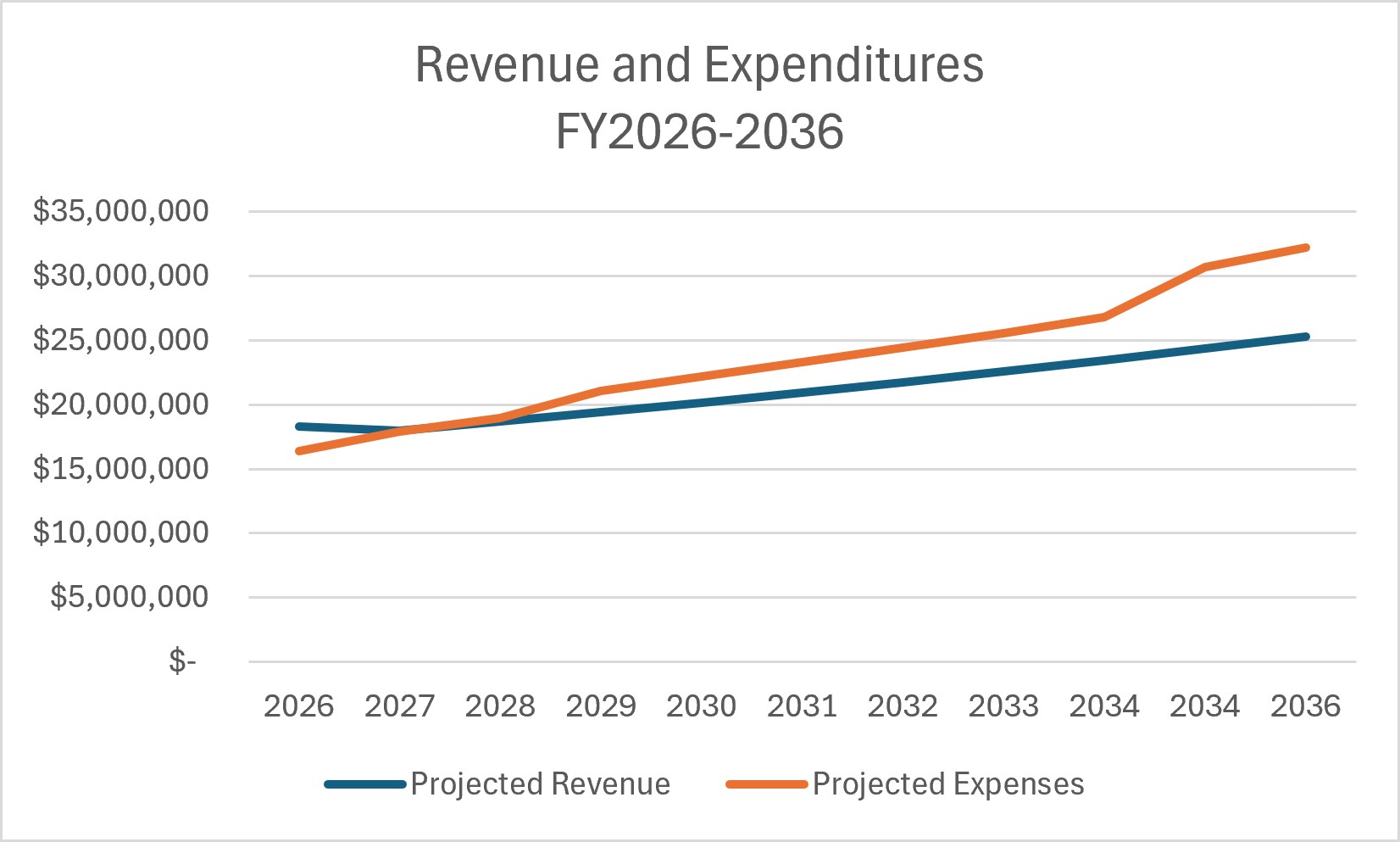
Beginning in 2027, personnel and operating costs are expected to outpace available revenue, due to several factors:

  • Equipment costs are on the rise
  • Personnel expenses are increasing
  • State legislation blocked WSFR’s ability to collect the total amount of voter-approved property tax revenue
Line graph showing projected expenses rising faster than projected revenue from 2026 to 2036.

Costs Are Increasing

  • Over the past 6 years, personnel expenses have grown from 55% to 78% of the District's total budget
  • Given the cost of living, WSFR has to compete with other area Districts for highly-skilled first responders
  • WSFR’s response is often limited to 3-person crews, rather than the 4-person crews required by the National Fire Protection Association
  • A new engine cost $$550,000 in 2019, but today that same fire truck costs $1.2 million

Service Calls Are Going Up

  • Calls for service have increased 29.4% in the past five years, from 4,034 to 5,218 calls annually
  • In 2025, medical-related calls for service accounted for 62% of all responses

What’s At Stake?

  • Slower response times – Without the addition of first responders, Station 1’s reliability is projected to drop to 75% (the goal is 85% to 90%)
  • Fewer emergency personnel for responses – WSFR will be forced to manage with 3-person crews (reducing on-scene time by an average of 25%)
  • Declining patient outcomes – 4-person crews have demonstrated faster on-site medical response